 OneTask
Published
Depth of field, crop factor and field of view, explained with numbers
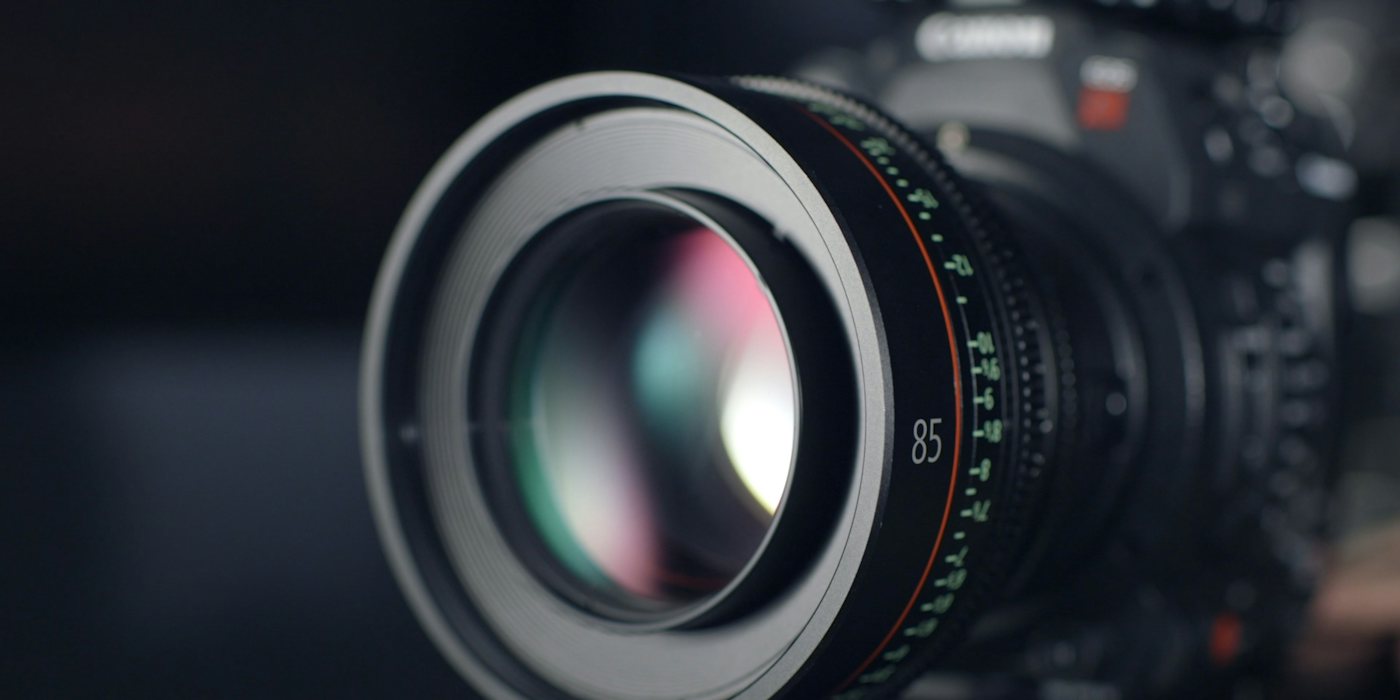
Most lens advice is delivered as folklore: "a 50 is a normal lens", "full frame gives you more blur", "f/2.8 is enough for portraits". All of it is roughly true and none of it is precise, and the imprecision is what makes people buy the wrong lens. The underlying maths is simple enough to check in a minute.
Crop factor: the same lens is not the same lens
A sensor smaller than a 35 mm film frame sees a smaller slice of the image a lens projects, which makes any lens behave as if it were longer. The ratio is the crop factor: about 1.5 for APS-C, 2 for Micro Four Thirds, and around 5 to 7 for a phone. A 35 mm lens on an APS-C body frames like a 52 mm lens on full frame.
That matters when you read a review or a tutorial written for a different format. The crop factor calculator converts a focal length between sensor sizes in either direction, so "shoot portraits at 85 mm" becomes "56 mm on my camera" rather than a lens that is too long to use indoors.
Crop factor also scales aperture for the purpose of depth of field and light-gathering: an f/1.8 lens on Micro Four Thirds gives the blur and the total light of roughly f/3.6 on full frame. Exposure per pixel is the same, which is why the f-number on the lens is not wrong, just incomplete.
Field of view: what actually fits in the frame
Focal length is only a proxy for what you care about, which is the angle the lens covers. The field of view calculator turns focal length and sensor size into horizontal, vertical and diagonal angles, and into the width of the scene at a given distance. That last number is the useful one: it tells you that a 24 mm lens at 3 metres covers about 4.5 metres across on full frame, which is whether the whole band fits on the stage or not.
Work backwards as well. If the room is 4 metres deep and you need a 2 metre wide subject in frame, the calculator gives you the focal length that does it, which is a far better basis for a purchase than "wide-ish".
Depth of field: how much is in focus
Depth of field is the range of distances that look acceptably sharp, and it depends on four things: focal length, aperture, subject distance and sensor size (through the circle of confusion). Longer lens, wider aperture, closer subject and bigger sensor all make it shallower.
The depth of field calculator gives the near and far limits for a given setup. Two results are worth knowing by heart for your own kit. First, at a head-and-shoulders distance with an 85 mm at f/1.8, the zone of sharpness is a few centimetres; one eye is in focus and the ear is not, which is either the look you want or a missed shot. Second, the hyperfocal distance: focus there and everything from half that distance to infinity is sharp, which is the setting for landscapes and for street photography when there is no time to focus.
Putting the three together
The classic comparison is a 50 mm f/1.8 on full frame against a 35 mm f/1.8 on APS-C. The field of view is nearly identical, so the framing is the same. But the depth of field of the 35 mm on the crop body at the same distance is about 1.5 times deeper, so the background is less blurred. Whether that is a problem depends on what you shoot; for product photography it is an advantage. The point is that it is a number you can look up rather than a matter of taste.
The short version
Convert focal lengths with the crop factor, check the angle of view against the space you actually shoot in, and run the depth of field for your usual subject distance. Twenty minutes with three calculators replaces most of the guesswork in choosing a lens.