 OneTask
Published
How much mulch to order, and how far a cubic yard or metre goes
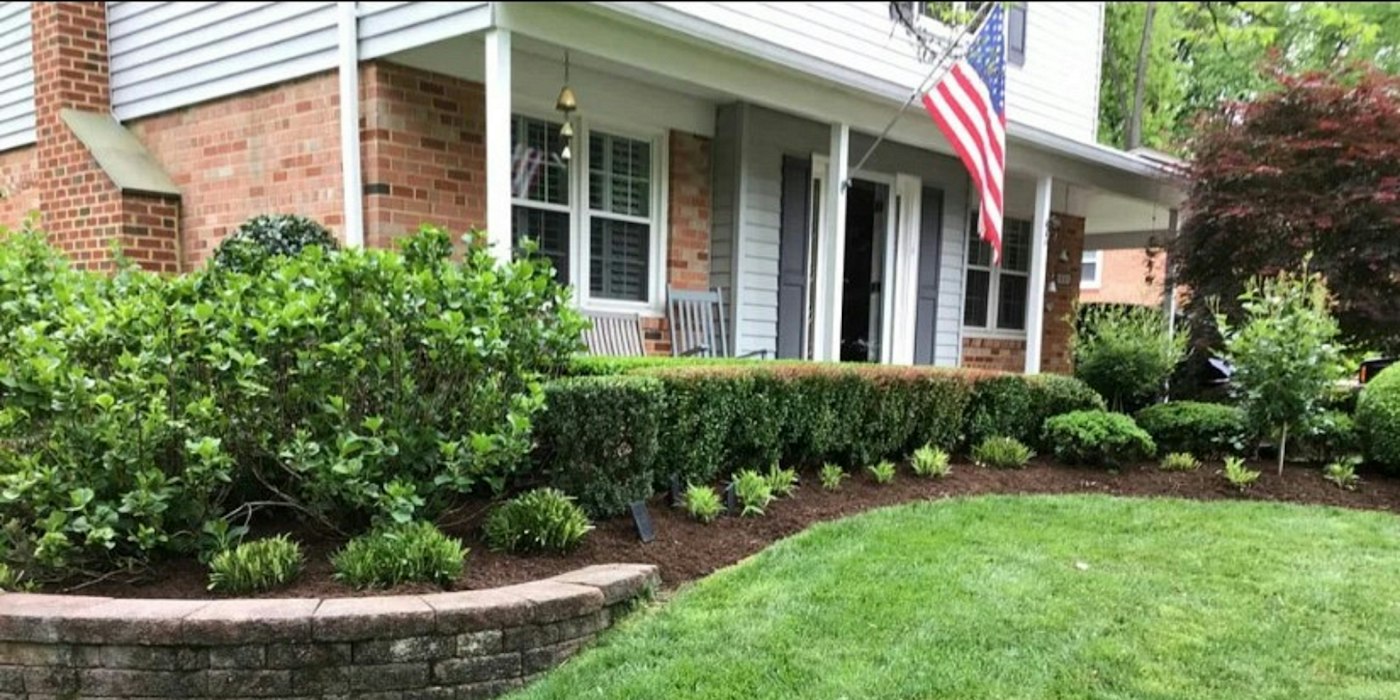
Ordering mulch is a volume problem pretending to be an area problem. You know roughly how big the beds are; the supplier sells by the cubic yard, cubic metre or bag. The bridge between the two is depth, and depth is the number most people skip.
The one formula
Volume is area times depth. Everything else is unit conversion.
volume = length × width × depth
The trap is mixing units. Beds are measured in feet or metres; mulch depth is talked about in inches or millimetres. Convert the depth first:
- 3 inches is 0.25 feet.
- 75 mm is 0.075 metres.
A bed 20 feet long and 4 feet wide, mulched 3 inches deep, needs 20 × 4 × 0.25 = 20 cubic feet. There are 27 cubic feet in a cubic yard, so that is about 0.74 cubic yards.
The metric version is easier because there is no 27: a bed 6 m by 1.2 m at 75 mm needs 6 × 1.2 × 0.075 = 0.54 cubic metres.
How far a cubic yard goes
This is the question people search for, and the answer depends entirely on depth:
| Depth | One cubic yard covers |
|---|---|
| 1 inch | 324 sq ft |
| 2 inches | 162 sq ft |
| 3 inches | 108 sq ft |
| 4 inches | 81 sq ft |
The metric equivalent for one cubic metre:
| Depth | One cubic metre covers |
|---|---|
| 25 mm | 40 m² |
| 50 mm | 20 m² |
| 75 mm | 13.3 m² |
| 100 mm | 10 m² |
Halve the depth and you double the coverage. That is why a quote that seems generous at 2 inches looks thin at 4.
Choosing a depth
There is no single right depth, but the usual ranges are:
- Fine mulch (shredded leaves, fine bark, compost used as mulch): 25–50 mm, 1–2 inches. It packs down, so more just smothers the soil.
- Medium bark and wood chip: 50–75 mm, 2–3 inches. This is the default for most beds and the depth most coverage tables assume.
- Coarse chip and nuggets: 75–100 mm, 3–4 inches. Big pieces leave gaps that let light through, so you need more to suppress weeds.
Whatever the depth, keep mulch a hand's width away from tree trunks and woody stems. The heaped "mulch volcano" around a tree holds moisture against the bark and invites rot.
Allow for settling and waste
Fresh mulch settles, especially fluffy shredded material, and some always ends up on the path or the lawn. Adding 5–10% to the calculated volume covers both. If your beds have curved edges, measuring them as rectangles slightly overestimates the area, which works in your favour.
For an awkward bed, break it into rough rectangles and triangles, work out each one, and add them up. A triangle is half the length times the width. A round bed is 3.14 × radius × radius.
Bags or bulk
Bagged mulch is sold by volume too, just smaller:
- A 2 cubic foot bag covers about 12 sq ft at 2 inches, or 8 sq ft at 3 inches. It takes 13.5 of them to make a cubic yard.
- A 50 litre bag covers about 1 m² at 50 mm, or 0.67 m² at 75 mm. It takes 20 of them to make a cubic metre.
As a rough rule, once you need more than about a cubic yard or a cubic metre, a bulk delivery is usually cheaper per unit, even with a delivery fee. Below that, bags are easier to move, store and carry through a house to a back garden. Bulk also arrives as a pile on the driveway, so check you have somewhere to put it and a wheelbarrow to move it.
Weight matters if you are collecting it
If you are picking mulch up in a trailer or a ute rather than having it delivered, check the weight. Dry bark mulch is light, often a few hundred kilograms per cubic metre. Wet mulch, compost and soil are much heavier, and topsoil can be well over a tonne per cubic metre. A trailer that happily takes a cubic metre of bark may be overloaded by the same volume of soil.
The same maths for soil and compost
Topsoil, garden mix and compost all follow the same formula; only the depth changes. Topping up a bed with 50 mm of compost is a mulch calculation. Filling a raised bed is a much deeper one, and the volumes get large quickly: a 2.4 m by 1.2 m bed 300 mm deep holds 0.86 cubic metres, and it will settle as it beds in.
Do it in one step
The mulch and topsoil calculator takes length, width and depth in either feet or metres and returns the volume in cubic yards or cubic metres, the number of bags in common sizes and an approximate weight, with a waste allowance built in. For deeper beds, the raised bed soil calculator adds a settling allowance and a topsoil and compost split. If you make your own, the compost calculator works out what a heap will produce and how much ground it will mulch.
The rest of the garden tools, from area to soil pH, are in the garden calculators section.