 OneTask
Published
Converting cups to grams, and why a cup of flour is not a cup of sugar
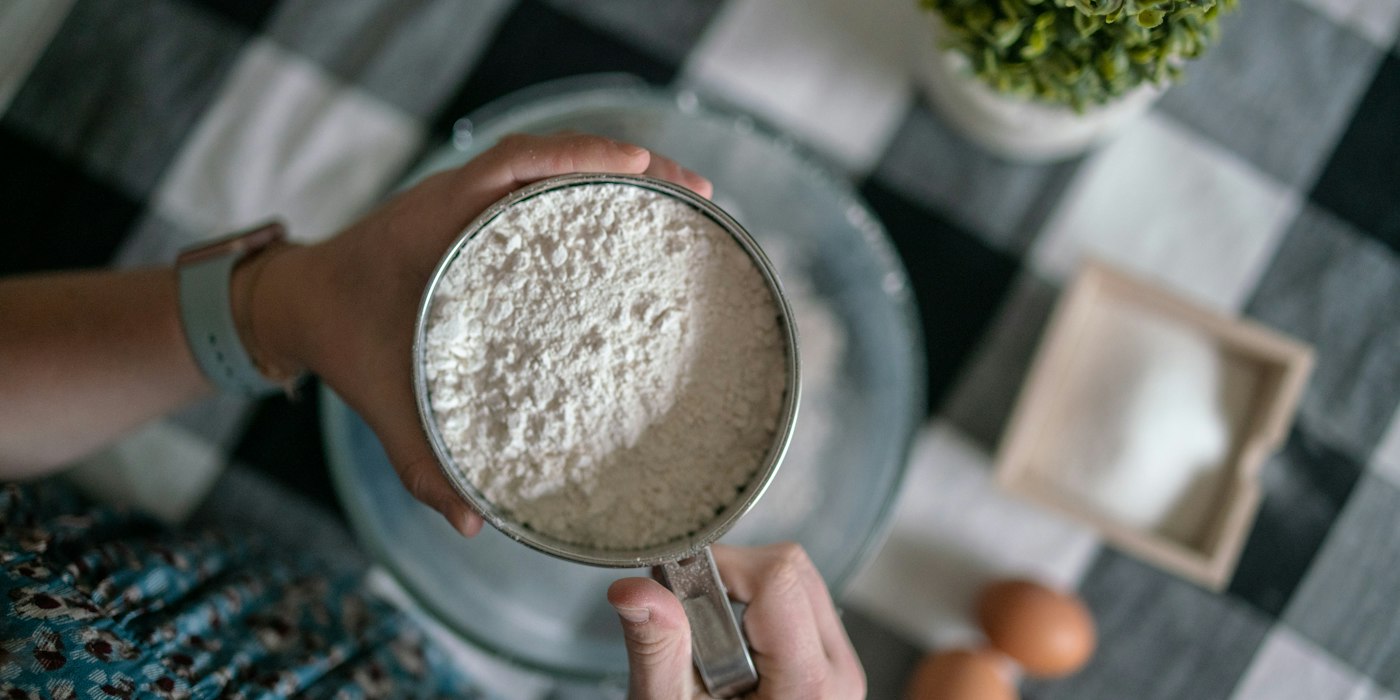
A recipe from one country asks for "1 cup of flour". Your kitchen scale shows grams. There is no single number to convert one to the other, because a cup measures how much space something takes up and a gram measures how heavy it is. The conversion depends on what is in the cup.
Volume versus weight
A cup is a volume. A cup of feathers and a cup of sand fill the same space and weigh wildly different amounts. Kitchen ingredients are less extreme, but the same principle applies: a cup of flour weighs about half as much as a cup of sugar, and a cup of honey weighs more than either.
So converting cups to grams needs a density for each ingredient. In practice, cooks use a table of typical weights per cup.
Typical weights per US cup
These are typical values for a level US cup of about 240 ml. Different sources vary by a few grams, mostly because of how the cup is filled.
| Ingredient | Grams per cup |
|---|---|
| Plain (all-purpose) flour, spooned | 120–125 |
| Bread flour | 125–130 |
| White sugar | 200 |
| Brown sugar, packed | 210–220 |
| Icing (powdered) sugar | 115–120 |
| Butter | 227 |
| Rolled oats | 90 |
| Uncooked white rice | 185–200 |
| Cocoa powder | 85–100 |
| Water or milk | 240 |
| Honey | 340 |
Two things stand out. Flour and sugar are nowhere near each other, and liquids are close to one gram per millilitre while syrups are much heavier.
How you fill the cup matters
Flour is the worst offender. Scoop a cup straight from the bag and press it down, and you can get 150 g or more. Spoon it lightly into the cup and level it with a knife, and you get around 120 g. That is a 25% difference in the most important ingredient in a cake, from technique alone.
Most recipe writers who give cup measures assume the spoon-and-level method unless they say otherwise. "Packed" brown sugar means pressed down firmly until it holds the cup's shape. "Heaped" means whatever is above the rim, which is why serious recipes avoid it.
Not all cups are the same size
The word "cup" means different volumes in different places:
| Cup | Volume |
|---|---|
| US customary cup | 236.6 ml |
| US legal cup (nutrition labels) | 240 ml |
| Metric cup (Australia, NZ, Canada, South Africa) | 250 ml |
| Old imperial cup (UK) | 284 ml |
The difference between a US and a metric cup is about 5%, which rarely matters for a casserole and can matter for a cake. The imperial cup is rare in modern recipes but turns up in older British cookbooks. If you are converting a recipe, check where it came from. The cups to millilitres converter shows each version side by side.
Spoons as well
Tablespoons and teaspoons are volumes too, and they have regional differences of their own. A US tablespoon is about 14.8 ml, while an Australian tablespoon is 20 ml, four teaspoons rather than three. For baking powder and salt that difference is large enough to taste.
Why bakers use scales
Weighing ingredients avoids every problem above. 125 g of flour is 125 g whether it was scooped, sifted or packed, and whatever size of cup the recipe writer owned. It is also quicker: put the bowl on the scale, zero it, add the first ingredient, zero again, add the next. No cups to wash.
If you bake from cup recipes often, it is worth converting a favourite recipe to grams once, writing the weights in the margin, and using those from then on. Results become much more consistent.
The same idea for coffee
Coffee is a good example of why weight wins. A "scoop" of coffee changes weight with the grind and the roast; a dark, coarse roast is less dense than a light, fine one. Coffee brewers work in grams of coffee to grams of water, a ratio such as 1:16, for exactly this reason. The coffee ratio calculator works out the dose for any amount of water and brew method.
Convert it
The cups to grams converter covers flour, sugar, butter, rice, oats and thirty more ingredients, with an explicit choice of US, metric or imperial cup and a fraction table for each ingredient, so a recipe in cups becomes a recipe in grams in one pass. For other kitchen and unit conversions, see the converters section.