 OneTask
Published
Currencies, landmarks and plants for a world that already has names
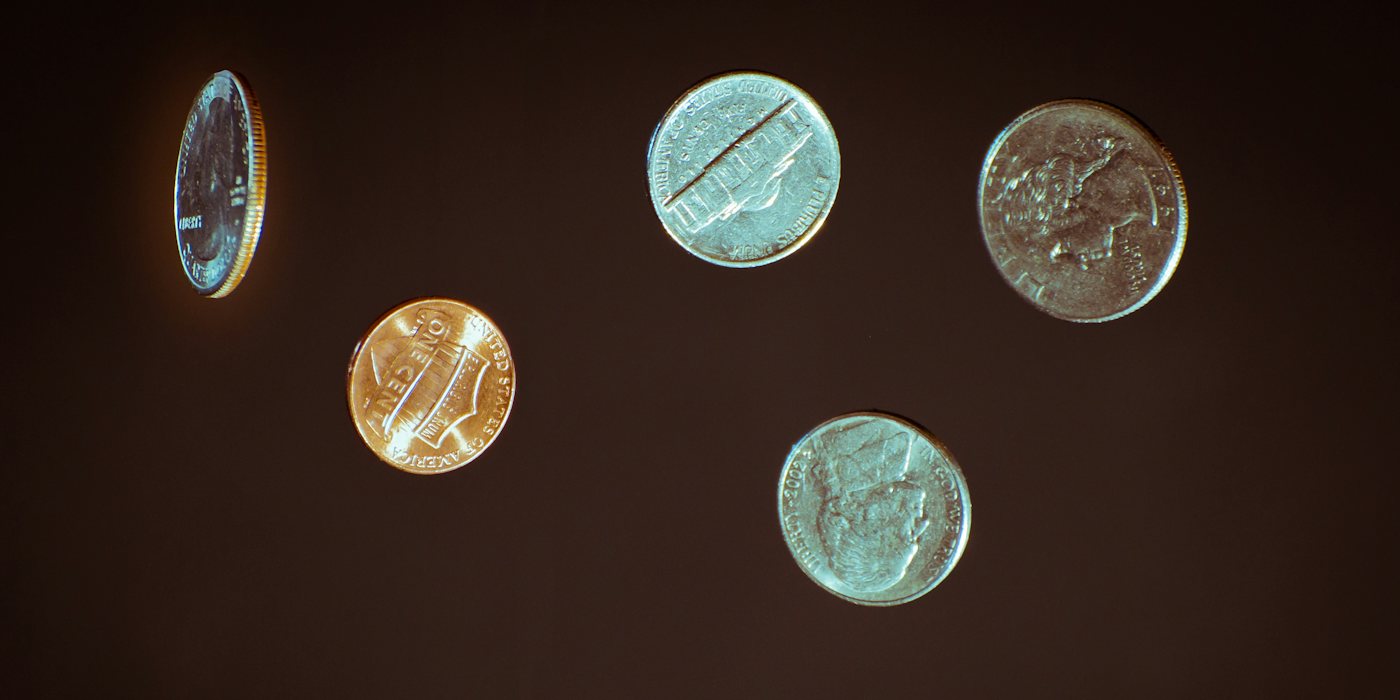
You have named the kingdoms, the rivers and the three people who matter. Then a character pays for something, and you need a word for the coin. Then they walk past a hill that locals call something, and a herbalist hands them a leaf. These are the nouns that fill in the space between the plot points, and inventing them one at a time, under pressure, in the middle of a sentence, is how you end up with the Goldcoin, Big Rock Hill and the healing plant.
Real names for these things are not arbitrary. They follow patterns, and the patterns are short enough to learn.
Money is named after four things
Survey real currencies and almost all of them come from one of four sources.
A weight. The oldest and most common pattern, because coins were originally lumps of metal of a stated mass. The pound is a pound. The peso and the lira are both weights. The shekel is a weight. The mark was a weight. If your setting has traders who care about metal content, weight names are the ones they use.
The metal or the object. The zloty is "golden". The real was "royal". The Dutch guilder is from gulden, "golden". The gold and silver of countless fantasy settings is not wrong — it is just the one everyone reaches for first.
A person or an authority. The sovereign, the napoleon, the louis d'or, the crown, the ducat (from duke). Coins carry faces, and the face names the coin. This pattern brings politics with it for free: whose face is on the coin, and whether people still use the old name after the old regime fell.
A design or an inscription. The dollar is from Thaler, from Joachimsthal, the valley where the silver came from. The florin carried a lily and was named for Florence. The rupee is from "wrought silver". The kopek is named for the spear on it.
The other realistic touch is that settings have more than one coin and the names do not match. There is the official unit, the small copper thing people actually use daily, and the large one nobody has ever held. Their names usually come from different eras and different sources, and everyday speech keeps the informal one — the way "quid" outlives whatever is stamped on the note.
Landmarks are described, not christened
Place names for natural features are overwhelmingly descriptive, and they described the thing to someone standing in front of it centuries ago. The pattern is almost always feature + distinguishing quality, in whatever language got there first:
- A colour or material — Blackwater, the Red Hills, Whitecliff
- A shape — Sharpfell, the Ladder, the Saddle, Table Mountain
- An animal seen there — Ravenscar, Boar's Head, Eagle Pass
- A resource taken from it — Saltmarsh, Iron Gap, the Quarry Fells
- Something that happened there — the Drowned Steps, Hangman's Reach
The mark of a real landmark name is that it is often mildly wrong or no longer true. The Blackwater runs clear now. There have been no eagles at Eagle Pass for two hundred years. Nobody knows who the Hangman was. That residue — a name that has outlived its reason — is the single most efficient way to make a place feel old, and it costs one clause.
The second efficient trick is a name in a language your viewpoint character does not speak, given with its translation attached: locals call it Cair Dhu, which the maps render as the Black Fort. Two names for one place implies a history of who arrived when.
Plants are named by use, look, or who they poisoned
Plant names are the most colourful category in real language, because they were coined by people who needed to tell a useful plant from a fatal one and wanted the name to help.
By what it does. Woundwort, feverfew, soapwort, lungwort, bloodroot, self-heal. The suffix -wort literally means a useful plant, and it is doing exactly the job it looks like it is doing.
By what it looks like. Foxglove, lady's slipper, snapdragon, cranesbill, toadflax, goatsbeard. Almost always an animal or a body part it resembles.
By where it grows. Marsh marigold, meadowsweet, stonecrop, wall rue, water hemlock.
By warning. Deadly nightshade, hemlock, wolfsbane, henbane, bittersweet. Note how the dangerous ones get blunt names — that is not literary, it is practical, because the name had to work when shouted.
For a setting, this gives you a free bit of characterisation: the same plant will have a herbalist's name and a peasant's name, and they will not agree. What the physicians' guild calls scarlet pellitory, the village calls dead man's finger, and the fact that the village name is the more frightening one tells you which of them has buried somebody.
Using the patterns
The reason these categories matter more than any individual name is consistency. A setting where the coins are all weights and the landmarks are all descriptive compounds reads as one culture. One where a Thaler, a Hill of Sorrows and a plant called Zyx'thal appear on the same page reads as three.
So pick the pattern per culture, then generate freely inside it. If the mountain folk name features by shape and the coastal cities name them after saints, you have said something about both without writing a paragraph of worldbuilding.
The fantasy currency name generator works through the weight, metal, authority and design patterns above, the landmark generator builds descriptive compounds, and the plant name generator uses the use, resemblance and warning forms. Generate a dozen, keep the three that sound like they come from the same place, and discard the rest — that filtering step is the part that makes them yours.